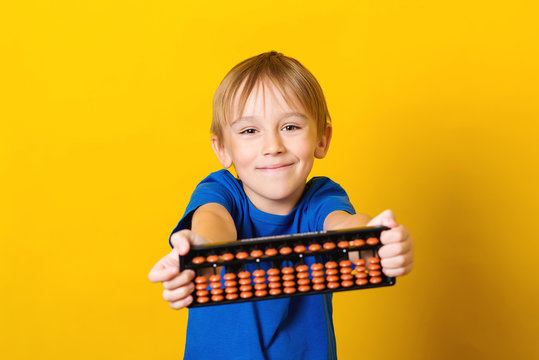
When folks think of an abacus, it’s usually that old wooden frame with colorful beads. But it’s way more than just a counting device; it’s a really effective learning technique. Using an abacus helps kids get better at math and boosts key skills like focus, memory, and reasoning.
Nowadays, people use abacus classes all over the world to help students do quick mental calculations. Kids pick up more than just math from abacus—they gain advantages that spill into other subjects and everyday challenges too.
What is an Abacus?
An abacus is a basic calculating gadget with rods and moveable beads. Sliding these beads around lets folks represent numbers and do math problems.
Before we had calculators and computers, folks used abacuses to crunch numbers. It’s still a hit for teaching kids today because it helps them visualize and get numbers.
With practice, trainees learn to do mental math by imagining the abacus. They call this neat trick the mental abacus.
History and Evolution of the Abacus
The abacus is one of the oldest calculating tools in human history. It was first used thousands of years ago in ancient civilizations such as China, Mesopotamia, Greece, and Rome.
Timeline of the Abacus
| Period | Development |
|---|---|
| Around 2500 BCE | Early counting boards were used |
| Ancient China | Development of the Chinese abacus (Suanpan) |
| Ancient Japan | Japanese Soroban introduced |
| Modern Era | Abacus used for educational training |
| Present Day | Mental abacus programs taught worldwide |
Although technology has advanced greatly, the abacus continues to be valued because it strengthens the brain rather than replacing thinking with machines.
How Does an Abacus Work?
The abacus represents numbers using beads. Each rod stands for a place value—ones, tens, hundreds, and so on. Take the ones rod; it can be set from 1 to 9. The tens rod covers 10 to 90, while the hundreds rod goes from 100 to 900. Sliding beads towards the middle bar indicates particular values. Let’s say you want to show 25—you move two beads in the tens column and five in the ones column.
Using these principles, folks can do math operations like adding, subtracting, multiplying, and dividing. With lots of practice, people get so good that they don’t even need the actual abacus. They can picture it in their head and still solve problems mentally.
Educational Uses of Abacus for Students
Abacus learning isn’t just about math; it boosts skills in all subjects too.
It helps with understanding numbers better, focusing longer, and calculating faster in your head. Plus, it builds confidence in math, strengthens memory, and improves listening skills. So, students usually see an overall rise in their grades. They also get more comfy tackling tough math problems thanks to those abacus techniques.
Frequently Asked Questions About Uses of Abacus
What are the main uses of an abacus?
An abacus is used for counting, addition, subtraction, multiplication, division, and mental arithmetic training.
How does an abacus improve mental math skills?
Students learn to visualize bead movements mentally, allowing them to perform calculations quickly without written work.
What is the educational use of an abacus?
It improves concentration, memory, visualization, logical thinking, and mathematical understanding.
At what age should children start learning abacus?
Most experts recommend starting between 4 and 8 years of age, although older students can also benefit.
Is abacus useful in the digital age?
Yes. While technology provides answers, abacus training develops thinking, memory, and problem-solving skills.
How does abacus help brain development?
It stimulates both sides of the brain through visualization, calculation, and coordination activities.
Can abacus improve concentration and memory?
Yes. Regular practice requires focus and mental visualization, which strengthens concentration and memory.
What is the difference between abacus and mental math?
An abacus uses physical beads, while mental math through abacus uses visualization of those beads in the mind.
How long does it take to learn abacus?
Basic skills can be learned within a few months, while advanced mental arithmetic may take one to three years of consistent practice.
Are abacus classes worth it for children?
For many children, abacus classes improve confidence, mathematical ability, concentration, and overall cognitive development, making them a valuable learning experience.